1915–1952
The capital's working and domestic beginnings
Browse the Inner South and the capital's early ambitions appear beside the places that kept it running. Kingston's Power House opened in 1915 to a design by John Smith Murdoch. Its round-the-clock lighting, telephone and ice production made it an unusual landmark in a settlement still being assembled.1
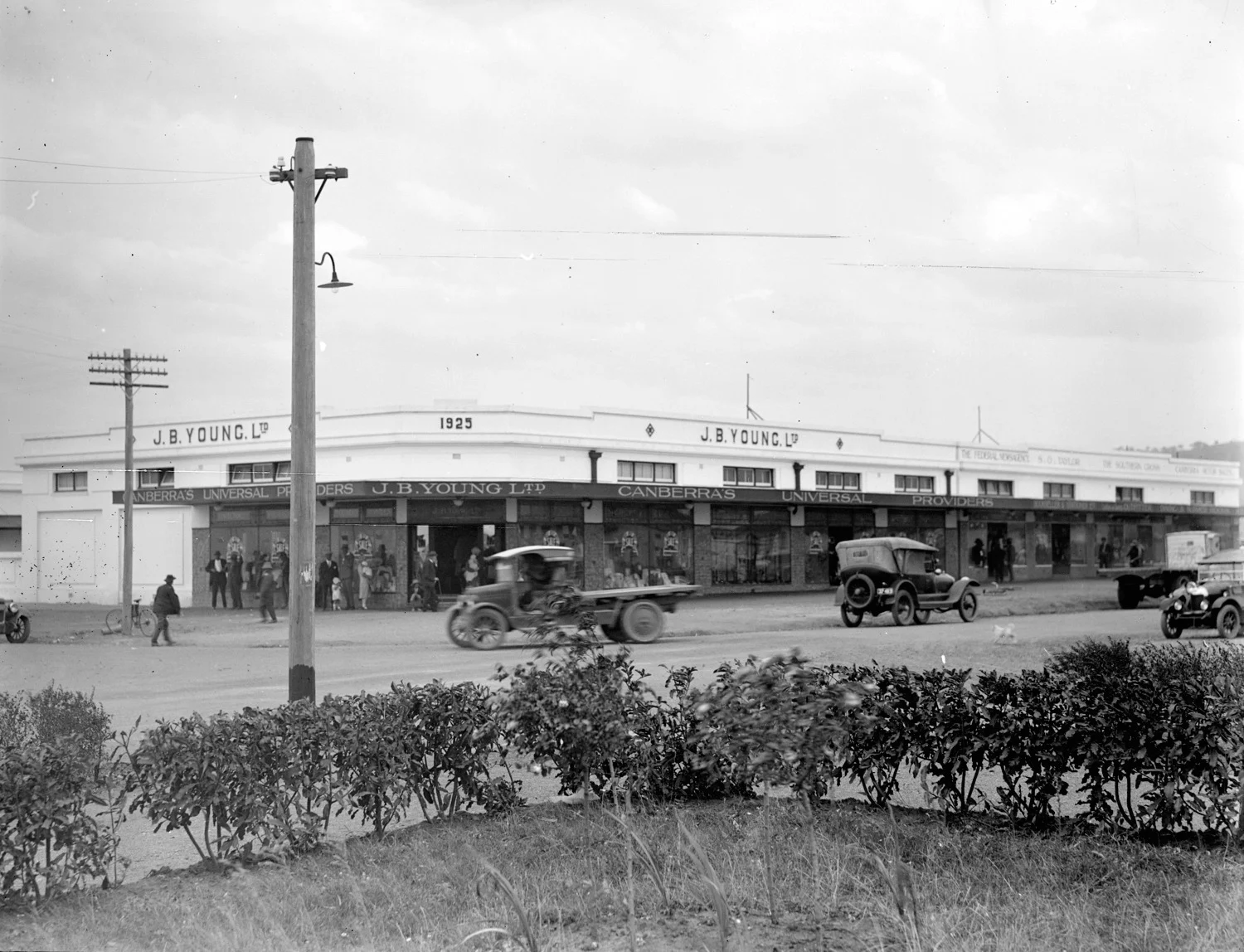
Kingston also housed people doing the work. Its surviving Garden City precinct includes homes built in 1926–27 for workers and lower-ranked public servants. Nearby Causeway Hall opened in 1926, hosting dances, boxing, worship and film screenings. The national construction project was creating a community with its own social spaces.1
Forrest tells another part of that housing story. Its early precinct was intended for more senior public servants, with much of it built in 1926–27. Streets inherited the geometry of Griffin's 1913 plan, while gardens and planting helped establish the neighbourhood's character. Different levels of government employment were reflected in different residential settings.2
At Manuka, recreation became another lasting part of local life. The oval developed during the 1920s, and the swimming pool opened in 1931 after providing employment during the Depression. The first Prime Minister's XI cricket match followed in 1952, adding a national tradition to an established neighbourhood sporting ground.3