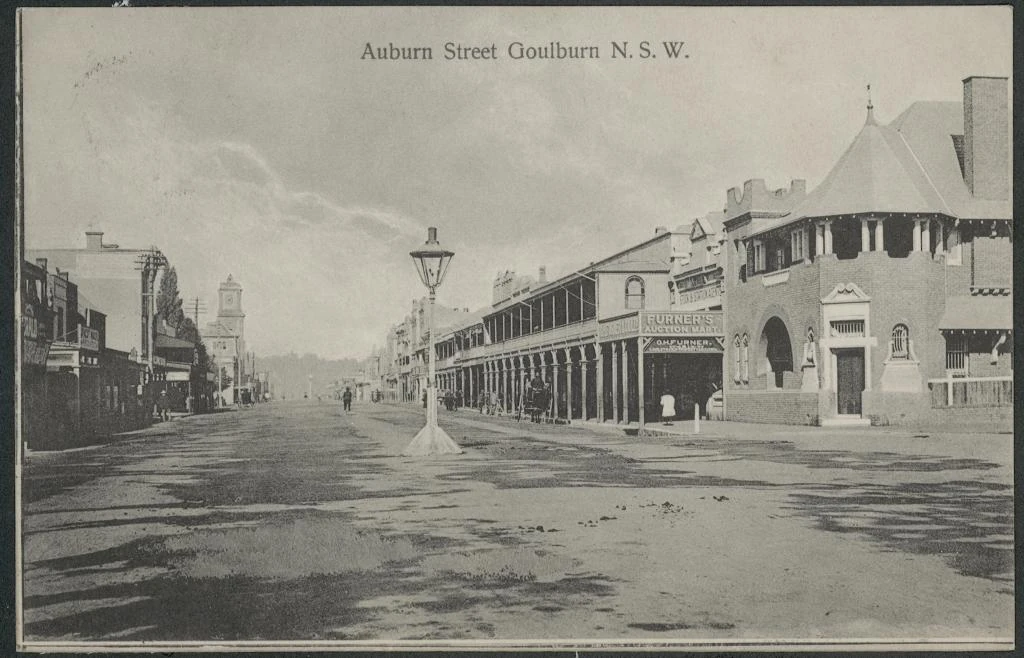
Inland city from 1863
Wool, railways and the making of an inland city
Goulburn's nineteenth-century buildings stand within a far older Aboriginal landscape. Goulburn Mulwaree Council's historical overview records Aboriginal occupation of the region for at least 21,000 years. European exploration and pastoral expansion belong to a much more recent chapter.1
Wool helped make the settlement a substantial regional centre. On 14 March 1863, royal letters patent declared Goulburn a city, the origin of its familiar description as Australia's first inland city. Its churches, public buildings and railway investment reflect the scale of nineteenth-century ambition.1
The railway arrived on 27 May 1869. The surviving main station is identified by Heritage NSW as the state's earliest first-class station building. Workshops, staff accommodation, goods facilities and later additions reveal how railways provided employment as well as transport. The precinct makes the working city visible beyond its more decorative civic landmarks.2
At Marsden Weir, another kind of infrastructure tells the story of everyday urban life. The waterworks, built between 1883 and 1885, supplied the city's first piped water system. Its original Appleby Brothers beam engine and Galloway boilers survive in the pumphouse, connecting Goulburn's growth with the practical business of supplying homes and businesses.3